
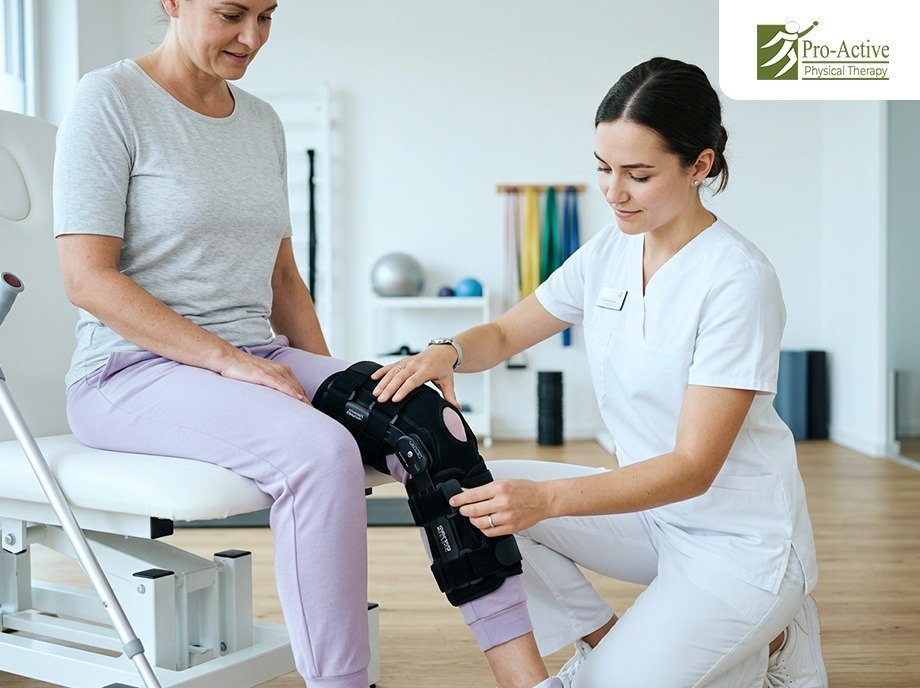
Knee Pain: When Could a Brace Help and When Do You Need Physical Therapy?
Knee pain can make activities of daily living, such as climbing stairs, walking, exercising, or even getting up from a chair, more challenging. If pain or discomfort has started to interfere with your daily life, you might question whether a knee brace is sufficient, or maybe it’s time to try physical therapy.
There is no definite answer to this, as it all depends on the reason behind your knee pain, how badly the symptoms are affecting you, and whether your knee is responding well to movement and activity. A brace is able to give extra support in some cases, but it doesn’t solve all the causes of knee pain.
Physical therapy for knee pain will address strength, mobility balance, movement patterns, and function. Knowing which method may be the best fit for which situation can assist you in making a better decision about your recovery.
What Does a Knee Brace Do?
A knee brace’s main aim is the delivery of support, stability, compression, or protection to the knee joint.
The braces may vary in styles and functionalities based on the condition and the objectives of the user. Choosing the right one will mostly depend on your particular illness and the outcomes that you want.
A physio may suggest a brace as a therapeutic aid for various reasons, and they generally have to do these functions:
- To add some extra support to a joint and this way allow the person to have a more stable motion
- A brace may help with a person carrying out his or her favorite activity at an appropriate intensity without straining the knee
- This means that wearing a brace helps to take off the pressure off that area
- A brace will be a means of protecting the knee while you are trying to recover after an injury
- Wearing a brace that applies pressure to the area has been proved medically useful in the reduction of swellings and the promotion of circulation
- Having a brace is more than likely to help the person with his or her lack of confidence when moving around and being physically active
Though, the fact of wearing a brace is a very different thing from the fact of the knee healing.
When Could a Knee Brace Help?
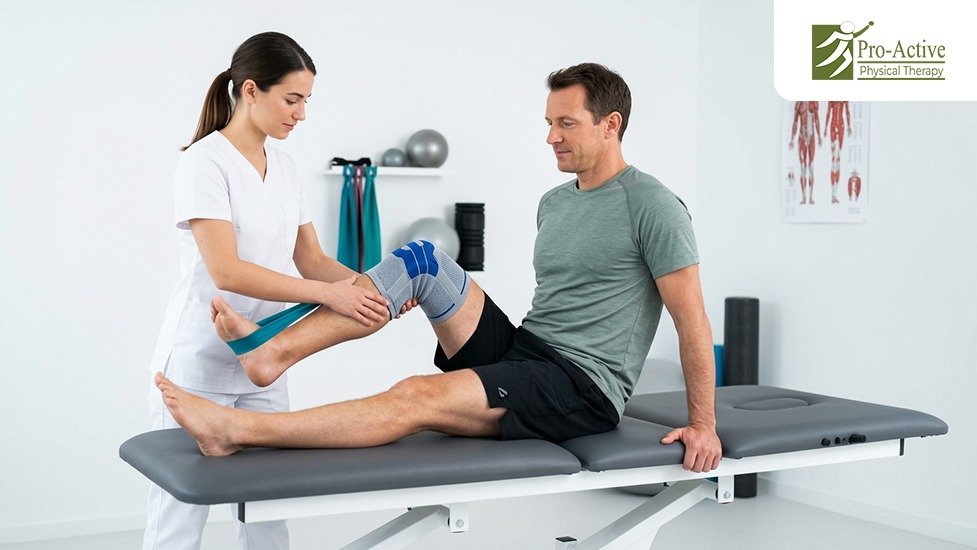
A knee brace may be useful when your knee needs additional support during certain activities or stages of recovery.
1. Your Knee Feels Unstable
If your knee feels like it may buckle, shift, or give way, additional external support may help you feel more secure while moving.
However, recurring instability shouldn’t simply be managed by wearing a brace indefinitely. Weakness, poor balance, joint problems, or an injury could be contributing to the instability and may require rehabilitation.
2. You’re Recovering from an Injury
Following certain knee injuries, a brace may provide protection or support while the knee recovers.
Your physical therapist or healthcare provider can help determine whether bracing is appropriate and how it should be used alongside rehabilitation.
3. Certain Activities Trigger Discomfort
Some people experience knee pain primarily during activities such as walking, running, lifting, or recreational sports.
In these situations, a brace may provide additional support while you gradually rebuild strength and improve movement mechanics.
4. You Need Additional Support During Rehabilitation
A brace can sometimes be incorporated into a broader rehabilitation plan.
For example, you may use a brace during certain activities while simultaneously working on exercises designed to improve strength, mobility, balance, and knee function.
When Is a Knee Brace Not Enough?
A brace can support your knee, but it doesn’t strengthen weak muscles, restore lost mobility, or correct movement patterns on its own.
You may need more than a brace if:
Your Pain Keeps Coming Back
If knee pain repeatedly returns after activity, simply supporting the knee may not address what’s causing the problem.
An assessment can help identify factors that may be contributing to recurring pain.
You’re Losing Strength
Weakness of the joint around the hip and knee could interfere with how the forces are being put on your leg. Physical therapy for pain in the knee may involve strengthening exercises aimed at increasing the capacity of the patient’s knee to handle activities during normal life as well as sports.
Your Movement Is Limited
Difficulty bending or straightening your knee can affect walking, stairs, squatting, and other daily movements.
Physical therapy can help address mobility limitations while gradually restoring functional movement.
Your Knee Keeps Swelling
Repeated swelling after activity can be a sign that your knee needs further evaluation.
Rather than relying only on a brace, consider having persistent symptoms assessed by a healthcare professional.
Pain Is Changing How You Move
When knee pain causes you to limp, avoid certain movements, or shift your weight to the other leg, your movement patterns may change.
A physical therapist can assess these patterns and develop a rehabilitation plan based on your specific needs.
Knee Brace vs. Physical Therapy: What’s the Difference?
The easiest example of the two difference is:
Knee brace = support
PT = work out how the knee and the whole body work
Though, you should not see yourself deciding between one and the other.
Some situations, the brace is really good in combination with the rehab. That’s because it gives support during your sessions where you improve the strength-mobility balance and movement.
Your treatment plan might contain what comes next:
- Strengthening exercises
- Mobility exercises
- Balance and stability training
- Gait or movement retraining
- Activity modification
- Manual therapy when appropriate
The most suitable one should be decided by what’s actually causing your symptoms and what you want to get back to.
How Can Physical Therapy Help with Knee Pain?
A physical therapist doesn’t simply treat the location where you feel pain. The assessment may consider how your knee, hip, ankle, and overall movement patterns work together.
During an evaluation, your therapist may look at:
- Knee range of motion
- Leg and hip strength
- Balance and stability
- Walking and movement patterns
- Pain during specific activities
- Functional limitations
- Previous injuries or surgeries
Based on these findings, your therapist can create an individualized rehabilitation plan.
The goal is to help you improve function and return to your normal activities as safely as possible.
Could Medical Taping Also Help with Knee Pain?
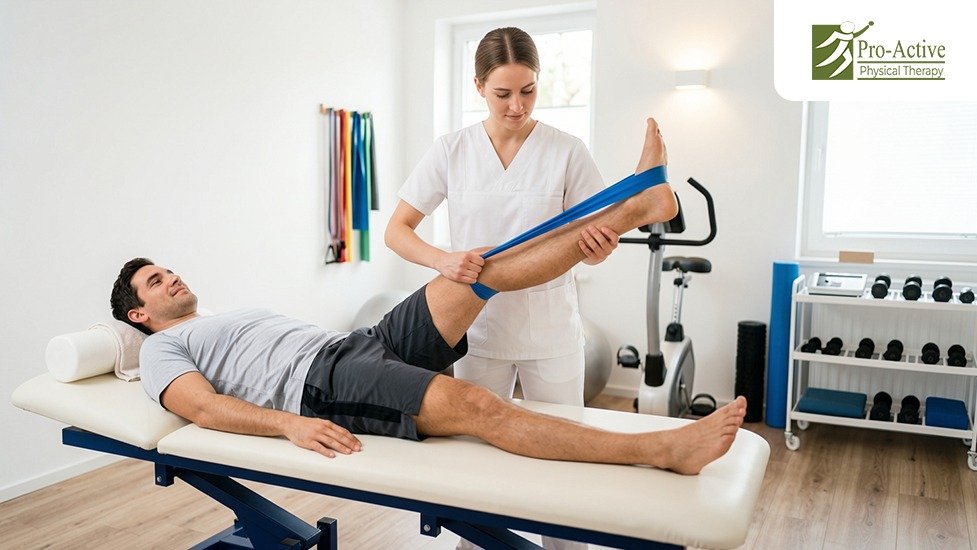
A knee brace is not the only way to get support when healing. Medical taping of the knee for pain relief can also be a part of an effective physical therapy program when indicated. Medical tape is put onto the area surrounding the area by a doctor/health care professional using a specific method according to the patient’s complaints, movements, and rehabilitation plan.
Unlike a rigid brace, the tape is quite light, and the knee joint will get its full range of motion while taped with it. A physical therapist can resort to taping for such purposes as:
- To enhance your movements’ support and safety
- To help increase your focus and control of your knee placement
- To help you be less afraid and more at peace during your activities
- To assist your exercises and relearning of movements
- To be your backup while developing strength and mobility.
One should not see medical taping as a substitute or replacement for muscle exercises or rehabilitation work. Instead, taping should be considered as an adjunct to physical therapy.
When Should You See a Knee Pain Physical Therapist?
Consider scheduling an evaluation with a “knee pain physical therapist” if:
- Knee pain persists or keeps returning.
- Pain is interfering with daily activities.
- You have difficulty walking or using stairs.
- Your knee feels unstable.
- You have reduced strength or mobility.
- Exercise consistently makes your symptoms worse.
- You’re recovering from a knee injury or surgery.
- You’re relying on a brace but still experiencing pain or limitations.
As long as your knee pain is not overly severe you should not have to wait too long before seeking help. It may be possible to assess the structure and function of your knee.
How Do You Know Which Knee Brace You Need?
Different knee braces serve different purposes.
One may be for putting pressure, the other for providing joint support or preventing injury. It might be a wrong approach to use the brace or to use it without knowing the necessity, so that might not be the solution to your problem.
A physical therapist or a specialist will be able to check whether wearing a brace is appropriate for your condition, and if yes, the degree of its involvement in your recovery process.
If you are going to use a support device, it should be integrated with your general approach to recovering without becoming the sole way of handling your symptoms.
Can You Wear a Knee Brace While Doing Physical Therapy?
In some situations, yes.
Your physical therapist may recommend wearing a brace during specific exercises, activities, or stages of recovery. The decision depends on your condition and the purpose of the brace.
For example, a brace may provide additional stability during movement while you work on strengthening the muscles that support your knee.
As your strength, control, and confidence improve, your therapist can reassess whether continued bracing is necessary.
Knee Rehabilitation Is About More Than Managing Pain
Knee rehabilitation in Sunnyvale aims to do far more than just help you endure without much pain. The main idea is to get you moving with more strength, stability, and confidence.
Knee braces can be helpful in some situations, mostly if a brace is prescribed for pain relief, but if your symptoms persist or get worse, that might be a sign that there is some underlying issue to your knee pain.
A knee brace, PT, or some mix – you will know once you find out more precisely what is going on with your knee.
Get the Right Support for Your Knee
A knee braces may not always be necessary based on what kind of pain we are referring to plus a brace only offers some limited help.
For instance, if you feel uncertain about what type of treatment your knee really needs, having a physical therapist evaluate you will help find out if bracing is sufficient, or if you would require rehabilitation therapy or some other combinations of treatments.
In Proactive Physical Therapy, customized physical therapy programs can help reduce knee pain, relieve the limitations in movement and increase strength and accomplish functional rehabilitation goals.
When persistent or recurrent knee problems have become so pervasive that they interfere with how you carry out your day-to-day life, like how you go for walks, play sports or work, you may want to “consider booking a consultation for knee physical therapy in Sunnyvale” to continue moving better.
Support may be the main requirement of your knee right now. The challenge is not just to determine whether support is needed but also to figure out what kind of support is the best one to give.