
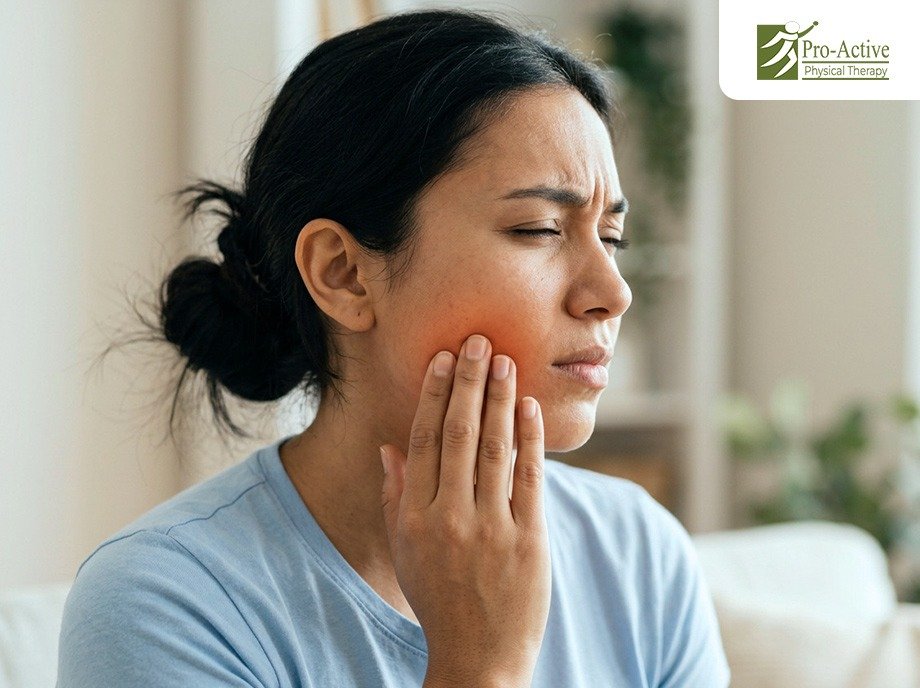
Jaw Pain, Headaches, or Clicking? When TMJ Physical Therapy May Help
Your jaw does a great deal of work each day. It helps you talk, chew, yawn, swallow, and even has a hand in “showing” how you feel. When your jaw begins to ache, click, or feel stiff, it’s pain can penetrate much more than mealtimes.
Some individuals may also have headaches, face pain, tightness in the neck, or an inability to open their mouth with their jaw.
Often these symptoms can be related to ‘temporomandibular disorders (TMDs)’ which is a term for a collection of disorders related to the temporomandibular joints and muscles controlling jaw movement. It helps to consider TMDs, as they have various etiologies and symptoms.
Conservative care, such as physical therapy, is one form of treatment for some patients. When might that TMJ physical therapy in Sunnyvale help, and what should you expect?
What Is TMJ and What Is TMD?
The temporomandibular joints (TMJs) are the two joints that connect your bottom jaw to your head. They are located just in front of your ears and permit your jaw to open and close, and to move from side to side.
TMD – temporomandibular disorder – is a term used to describe a number of functional and structural disorders, which can occur in the jaw joints, and related structures. These include over 30 different conditions, with multiple concurrent conditions possible.
That implies TMJ pain is no more certain trouble. Your own possible symptoms and their underpins should be separately examined.
Is Jaw Clicking Always a Problem?
That’s not always true.
The presence of a clicking or popping sound in the jaws, without any pain or limitation of movement, is not uncommon and may not require any treatment.
Yet, clicking becomes more relevant when it occurs alongside symptoms such as:
- Jaw pain
- Painful clicking or popping
- Difficulty opening your mouth
- Jaw stiffness
- Jaw locking
- Pain while chewing
- Facial or neck pain
- Headaches tied to jaw symptoms
You may also need an assessment to uncover the cause behind these symptoms.
Could Your Headaches Be Connected to Your Jaw?
Yes, occasionally.
These would include headaches due to a painful jaw disorder. Muscles of the jaws and neck contribute to pain and tensions about the head and face.
That doesn’t imply that all migraines are with the jaw though.
There can be many reasons for headaches, and so it is recommended that an appropriate healthcare worker assess persistent symptoms rather than just diagnose them as originating from the TMJ.
If you frequently experience headaches with jaw pain, jaw tension, painful chewing, or changes to your jaw motion, bring up those associations during your assessment.
What Can Contribute to TMJ Problems?
TMDs can have multiple contributing factors, and in many cases, there isn’t one obvious cause. Potential contributors can include injury, jaw clenching or grinding, muscle tension, stress, posture, and changes in jaw or neck movement.
For example, prolonged forward-head posture while working at a computer or using a phone may contribute to tension in the neck and jaw muscles for some people.
Similarly, frequently clenching your jaw – especially without realizing you’re doing it – can place additional demand on the muscles involved in chewing.
Understanding these contributing factors can be an important part of managing symptoms.
When Could TMJ Physical Therapy Help?
So for those with persistent TMD symptoms, physical therapy is one of several conservative treatment options.
This is reflected by current research and clinical guidance, which endorses the use of manual therapy, therapeutic exercises, education, and movement retraining for restoring jaw function and pain relief in ideal candidates.
It takes a trained TMJ therapist in Sunnyvale to know that.
Your evaluation may include your:
- Jaw movement
- Jaw range of motion
- Neck mobility
- Posture
- Muscle tension
- Movement patterns
- Symptoms during chewing or talking
- History of injury or dental procedures
This more comprehensive evaluation can identify possible causal factors for your symptomatology.
How Can Physical Therapy Help with TMJ Symptoms?

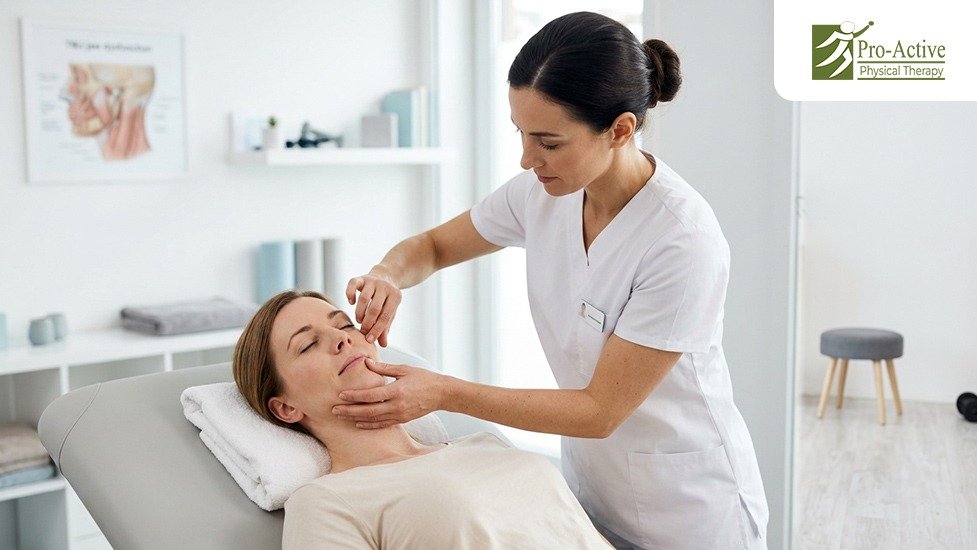
Jaw pain physical therapy for TMJ and TMD symptoms in Sunnyvale
Your treatment will depend on your specific symptoms and evaluation findings, but physical therapy may include several approaches.
Manual Therapy
Hands-on techniques may be used to address soft-tissue tightness or restrictions affecting the jaw and surrounding areas.
NIDCR notes that manual therapy may help improve function and relieve pain in some people with TMD.
Therapeutic Exercises
Specific jaw and neck exercises can help improve movement, coordination, and muscle function.
Exercises should be selected based on your condition rather than assuming that everyone with jaw pain needs the same routine.
Posture and Movement Education
Your jaw doesn’t work in isolation.
A physical therapist may look at how your head, neck, and jaw move together and provide guidance on movement and posture that may support your recovery.
Relaxation and Muscle Awareness
If jaw clenching or muscle tension contributes to your symptoms, learning to recognize and reduce unnecessary tension may become part of your management strategy.
What Happens During a TMJ Physical Therapy Evaluation?
The initial consultation will usually involve a discussion of your symptoms.
Your physical therapist may ask:
A. When did the symptoms start
B. Location of pain.
C. If it does, is it at a greater rate or to a greater extent while chewing?
D. Do you experience clicking or locking of your jaws?
E. Do you suffer from any pain in your head or neck?
F. Had any injury to your jaw, face, or neck?
G. Are you aware that you’re tight your jaw?
If necessary, the physical therapist can then evaluate any TMJ and neck movements, as well as your posture, tenderness of muscles and any functional restrictions.
The findings may also help to decide if you think that physio is suitable and if another healthcare professional should be seen.
Do You Need a Dentist or a Physical Therapist?
Sometimes, the answer may be both.
TMDs can involve the jaw joint, chewing muscles, teeth, neck, and other factors. Because symptoms can overlap with other conditions, diagnosis may require evaluation by a dentist, physician, physical therapist, or other appropriate healthcare professional.
A physical therapist can assess movement and musculoskeletal contributors, while a dentist or physician can evaluate dental, medical, or other potential causes when appropriate.
A collaborative approach can be particularly useful when symptoms are persistent or complex.
When Should You Consider a TMJ Evaluation?
Consider seeking professional guidance if you experience:
- Persistent jaw pain
- Painful clicking or popping
- Difficulty opening or closing your mouth
- Jaw locking
- Pain while chewing
- Recurring headaches alongside jaw symptoms
- Facial or neck pain
Anything that is affecting your ability to eat speak sleep or carry out your usual day-to-day activities.
You don’t have to assume that all clicking jaws need treatment. It is the syndrome, dysfunction, and severity that are at issue.
What Can You Do in the Meantime?
If your symptoms are mild, some conservative strategies may help reduce irritation while you determine whether further evaluation is needed.
Depending on your situation, these may include:
- Avoiding excessive gum chewing
- Being mindful of daytime jaw clenching
- Choosing softer foods temporarily if chewing is painful
- Avoiding unnecessarily wide jaw movements
- Using heat or cold as appropriate
- Following exercises recommended by your healthcare professional
NIDCR recommends conservative approaches first for many TMD problems and notes that many cases improve without invasive treatment.
Don’t Ignore What Your Jaw Is Telling You
A clicking jaw isn’t automatically a problem. But when clicking comes with pain, stiffness, limited movement, headaches, or difficulty chewing, it’s worth paying attention.
Jaw pain physical therapy can be one part of a conservative approach focused on improving movement, reducing discomfort, and helping you return to normal function.
If you’re experiencing persistent jaw symptoms, a professional evaluation can help determine what’s contributing to them and whether physical therapy is appropriate.
Looking for TMJ Physical Therapy in Sunnyvale?
If jaw pain, headaches, or discomfort are affecting your everyday life, you don’t have to simply work around the symptoms.
At SV Proactive Physical Therapy, a personalized assessment can help identify movement and musculoskeletal factors that may be contributing to your symptoms and determine an appropriate rehabilitation approach.
If you’re looking for TMJ treatment in Sunnyvale or a TMJ therapist in Sunnyvale, start with an evaluation to understand what your jaw and surrounding muscles may need.
Ready to take the next step? Schedule a TMJ evaluation in Sunnyvale and start working toward more comfortable jaw movement.
Persistent or severe jaw, facial, or head symptoms should be evaluated by an appropriate healthcare professional. Sudden jaw pain accompanied by chest pain, shortness of breath, dizziness, nausea, or arm pain requires urgent medical attention.
Frequently Asked Questions
1. Can physical therapy help with TMJ pain?
Physical therapy may help some people with TMD by addressing jaw and neck movement, muscle tension, mobility, and function through approaches such as manual therapy and therapeutic exercises.
2. Is jaw clicking a sign that I have TMJ disorder?
Not necessarily. Clicking without pain or limited jaw movement is common and generally does not require treatment. Painful clicking or clicking accompanied by other symptoms may warrant an evaluation.
3. Can TMJ problems cause headaches?
TMDs can be associated with headaches, but not every headache is caused by the jaw. A professional evaluation can help determine whether your symptoms may be connected.
4. What does TMJ physical therapy involve?
Treatment may include education, jaw and neck exercises, manual therapy, movement retraining, posture guidance, and strategies for managing muscle tension, depending on your individual needs.
5. Should I see a dentist or physical therapist for jaw pain?
It depends on your symptoms. A physical therapist can assess musculoskeletal and movement-related factors, while a dentist or physician may evaluate dental or other medical causes. Some people may benefit from coordinated care.