
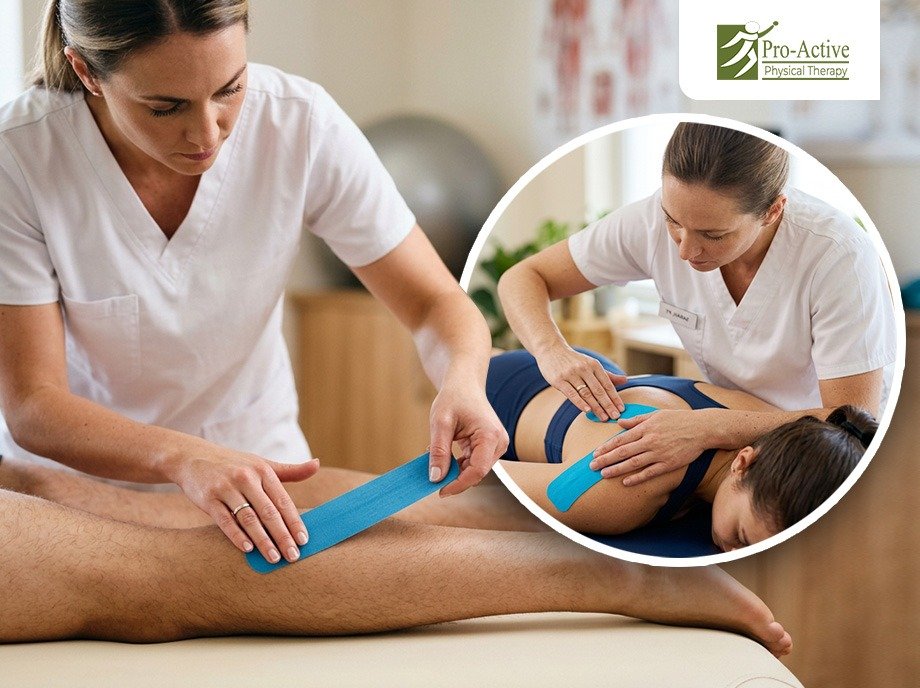
Kinesio Taping Isn’t Just Support: How It Re-educates Your Muscles and Joints
Typically, when everyone notice kinesio taping, they think it’s just giving support to the hurt spot. Like a strip of tape on the knee, shoulder, or back serving as a kind of brace. Yet, that’s pretty much not what it’s doing. In fact, kinesio taping is scarcely about restraining your body and more about instructing it to move more efficiently.
Why Support Alone Isn’t Enough
Your body naturally changes after a damage or a strain. Some muscles even stop working properly. While some become more and others become less active.
To escape from the discomfort, your joints may also start moving in a different way. Initially, the problem is helped by that modus operandi. In the longer run however these changes cause inefficient movements, additional strain, and problems that repeatedly come up.
In case of traditional support methods, these are the ways in which their limitations show up. They just secure the region but do not change the way the body moves.
How Kinesio Taping Actually Works
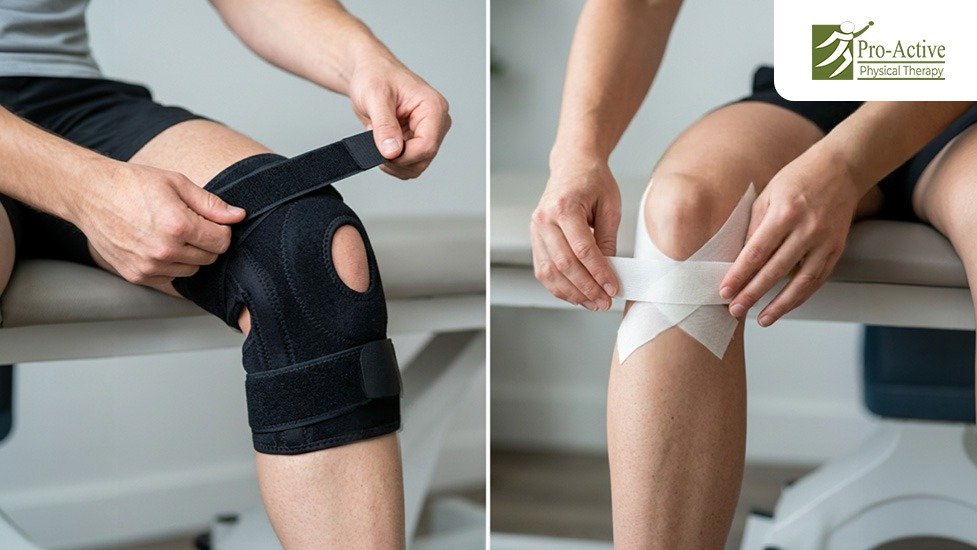
Kinesio taping targets the nervous system, as well as the muscles.
Once placed on the skin, the tape activates sensory receptors in a very subtle way. Essentially, this produces a signal that your brain receives, allowing it to get a clearer picture of the position and motion of a certain part of your body. Hence, this mechanism boosts awareness.
Moreover, when one gains enhanced awareness, his/her body is then able to make changes.
That’s the reason why kinesiology tape is frequently employed not merely for comfort, but to direct one’s movement in an economically efficient manner.
Re-educating Muscles, Not Just Supporting Them
Helping muscles to work better is definitely one of the main functions of kinesiology taping.
Sometimes, after an injury, one muscle gets its “switch turned off” and it doesn’t work at the right time. At the same time, some muscles may compensate by working too much. Kinesio taping corrects this misbalance.
It prompts the right muscles to work at the right time, while at the same time it lowers the amount of unnecessary tension in other muscles. Gradually, the body re-learns correct movement patterns through this method.
This is particularly beneficial for the knee area where kinesiology tape knee methods not only assist in the correction of tracking but also help in lowering the strain during activities such as walking or cycling.
Improving Joint Awareness and Control
Your joints rely on surrounding muscles and sensory input to move correctly.
When that system is disrupted, movement can feel unstable or off.
Kinesio taping helps restore that connection.
By improving how your brain perceives joint position, it enhances coordination and control. Movements begin to feel smoother, more natural, and less effortful.
This is why taping is often used in both recovery and performance settings.
Movement Without Restriction
One of the biggest advantages of kinesio taping is that it allows full movement.
Unlike rigid supports, it doesn’t lock a joint in place. Instead, it works with your body.
The tape acts as a guide, not a limitation.
This makes it especially useful for active individuals, where maintaining mobility is just as important as reducing discomfort.
Where This Approach Makes a Difference
Generally, kinesio taping is meant for scenarios where enhancing movement patterns is the primary objective, rather than merely offering one.
Take kinesio taping for shoulder pain, for instance. It can not only lessen the pressure but also promote a superior interaction of muscles while you are engaged in your day-to-day or overhead activities.
Similarly, it is a handy tool to correct one’s posture, maintain one’s balance, and even facilitate the healing process after an injury caused by athletic exertion. However, in all these instances, the aim is the very same: enabling your body to work more efficiently rather than merely making it feel supported.
A Different Way to Think About Recovery
Recovery entails more than mere pain relief. It is about bringing back the quality of your movement that may have been lost.
One of the main benefits of kinesiology taping is that it provides a different perspective. Rather than just guarding a part, it assists the body in learning to work in a relaxed and graceful manner.
Proactive Physical Therapy uses kinesiology taping with a movement-based approach to help people get back control, improve coordination and be confident when getting back to their activities.
Take the Next Step
If you’re dealing with discomfort, recurring strain, or movement that doesn’t feel quite right, it may be time to look beyond simple support.
Kinesio taping can help your body relearn how to move the way it’s meant to.
Book a kinesio taping session in Sunnyvale and take the next step toward better movement and lasting recovery.